Chips Happen: A Calm, No-Blame Routine for Accidental Damage on Home and Office Visits
Nobody books home or office support hoping something gets broken. But houses are full of things that chip, crack and topple, and a busy visit is exactly when a stray elbow finds the one ornament on the windowsill. The good news is that accidental damage rarely turns into a drama on its own. It turns into a drama when nobody agreed, in advance, what to do in the first hour.
So let us talk about the boring, reassuring bit: a short damage protocol that both sides sign up to before anything falls over. Not a legal document. More of a shared route map, kept to one page and agreed at booking rather than in the heat of the moment.
Agree the route while everything is still upright
The worst time to work out who rings whom is while someone is holding a dustpan and looking apologetic. Before the first visit, agree four things: who reports damage, through which channel, how quickly, and who contacts the insurer. Write it down. A text or an email is fine. The point is that both sides know the answer without having to invent it while sweeping up.
For a home visit, that usually means the client is the first point of contact for their own contents insurance. For an office, it is often whoever handles the business policy. The support company should also have its own public liability cover and a named person who deals with claims. Swap those names early. It takes two minutes and saves a lot of passive-aggressive emailing later.
First ten minutes: make it safe, not tidy
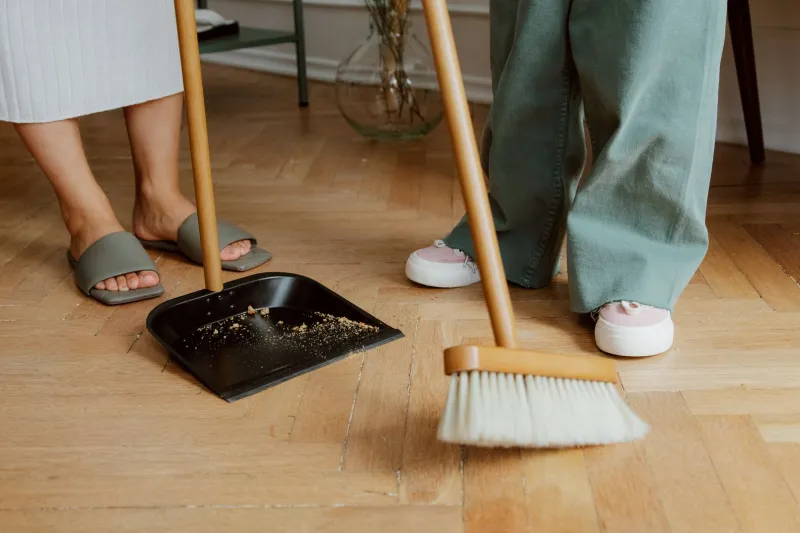
Safety comes before paperwork. If something has smashed, keep people and pets out of the area, deal with any water near electrics, and move sharp pieces carefully. What you should not do is sweep the whole lot into the bin and carry on. Broken pieces are evidence, and insurers like evidence.
Where it is safe to do so, leave the scene roughly as it is. Do not attempt a DIY repair, do not fetch the superglue, and do not quietly replace the item from a shop before anyone has seen it. Take a wide photo showing the room and the item in context, then two or three close-ups from different angles. Include something for scale if it helps. If the item had a mark or a crack already, photograph that too. A factual note of the time, the room and what was being done is worth more than a paragraph of apology.
Report it the same day, in one channel
A useful rule: same day, one channel, no chasing. Pick email or a message thread and keep everything there so nothing gets lost in a phone call. The report does not need to be long. It needs to answer the obvious questions.
- What was damaged, and where was it?
- When did it happen, and who was present?
- What was being done at the time, described plainly?
- What photos were taken, and where are they saved?
- What was done immediately to make things safe?
- Who has been told so far?
Leave out opinions about whose fault it was. That is not because fault never matters. It is because the first report should capture facts while they are fresh, and fault is a separate conversation that insurers and sensible adults can have once everyone has calmed down. The support team should also log the same details internally, so there is a matching record on both sides.
Keep blame out of the room
A no-blame approach does not mean nobody is responsible. It means the first conversation is about what happened, not about who should feel bad. Most damage during a visit is a genuine accident: a cable caught, a door swung, a box shifted. Treating it as a disciplinary event makes people hide things, and hidden damage is always worse.
There is a small language trap here. Saying "I am sorry this happened" is human and fine. Saying "we accept full liability and will pay for everything" on the doorstep is a promise you may not be able to keep, because insurers and excesses have their own view. Kindness and a clear process are not in conflict. Keep the sympathy warm and the commitments factual.
Who rings the insurer?
Agree this in advance, because it is the step most likely to stall. At home, the client usually contacts their contents insurer, since accidental damage cover often sits there. In an office, it is usually the business insurance contact. The support company's public liability policy may also respond, depending on the circumstances, so it is worth notifying them in parallel rather than waiting to see.
Ask for a claim reference and note it down. Be realistic about excesses: even a valid claim may leave the client paying the first slice, and that is worth discussing calmly rather than discovering later. For small items, a straightforward repair or replacement agreement in writing can sometimes be kinder than a claim, but only if both sides actually agree and it is recorded. No cash handshake on the spot, please.
A one-page damage note
Keep a simple form, digital or paper, with fields for the date and time, location, item, description, photo references, people present, work being carried out, immediate safety action, who was notified, the claim reference and the next step. Both sides keep a copy. It sounds fussy until the first time you need it, and then it feels like a seatbelt.
Things that make it worse
Do not throw away the broken pieces before they have been photographed. Do not promise a replacement on the spot without checking. Do not debate fault in front of other staff, family or clients. Do not post about it online. Do not let a small repair drift into a three-week silence. And do not treat a reported accident as a confession of incompetence, because the next person will simply stop reporting.
The quiet payoff
A calm damage plan protects the client, because their belongings are handled properly and their insurer gets a clean report. It protects the support team, because they can report a mistake without fearing a shouting match. And it protects the working relationship, which is the bit that actually keeps a home or office running smoothly. In our experience, the visits that go best are not the ones where nothing ever breaks. They are the ones where everyone already knows what happens if it does.